The complete guide to
pass-through voting 

Pass-through voting gives investors in pooled funds and ETFs a direct say in how their shares are voted at company AGMs. Here's how it works, why it matters, and how it's being adopted.

What is pass-through voting?

When you invest through a pooled fund — such as a pension, ETF, or mutual fund — your money is combined with other investors’. The fund manager buys shares and typically votes them according to their own policies. This means investors have economic exposure to companies, but limited influence over how votes are cast on their behalf.

Pass-through voting changes this by allocating voting rights to underlying investors in proportion to their holdings. An investor with 0.5% of a fund, for example, can influence 0.5% of the vote.

The fund manager retains legal ownership of the shares and fiduciary responsibility, but voting decisions can reflect the priorities of the investors whose capital is at stake. Pass-through voting is already in use today, including at scale across some of the world’s largest asset managers.

Read: What is pass-through voting?

Read: How voting in pooled funds works today


How does pass-through voting differ from traditional proxy voting?

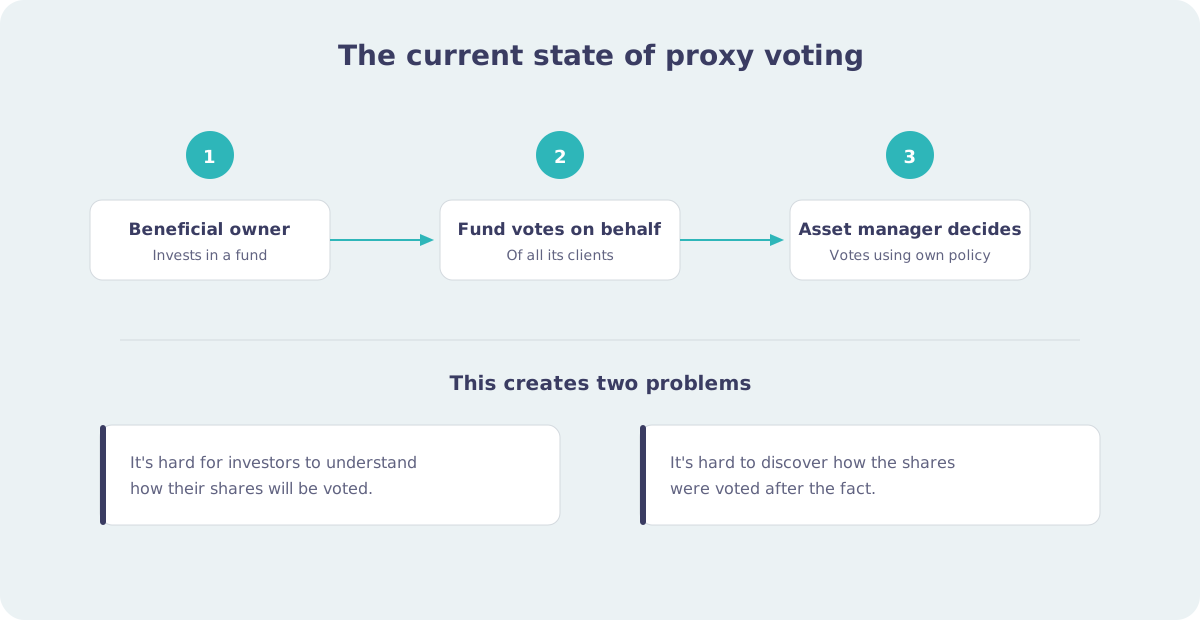
traditional-proxy-voting-1

In traditional proxy voting, the fund manager votes on behalf of all investors in the fund. Investors have no visibility into how votes are cast and no ability to influence the outcome, creating two problems:

  • First, investors with strong views on specific issues such as governance, climate, or executive pay have no way to express them through the shares they indirectly own.

  • Second, institutional investors who invest across multiple pooled funds can find their fund managers voting in opposing directions on the same proposals — effectively cancelling out their own influence.

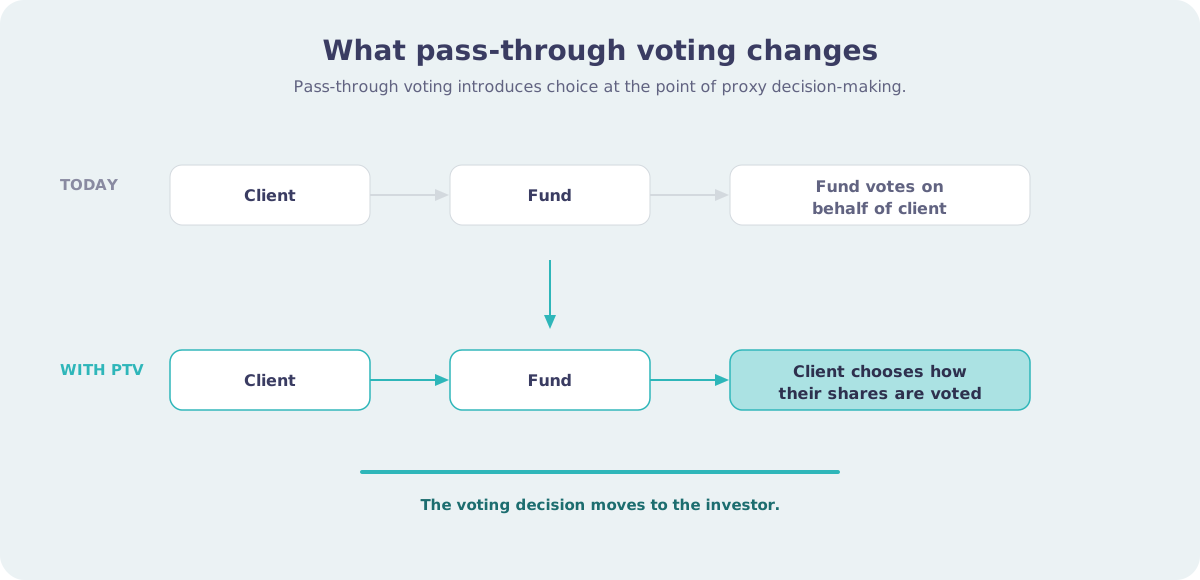
Pass-through voting solves both of these problems.

The investor chooses a voting policy — from a proxy advisor, from the fund manager, or a custom policy of their own — and that policy is applied to their proportional share of the fund's votes.

→ Read: Voting and engagement — the two pillars of stewardship


pass-through-voting-change

What's the difference between the terms: "pass-through voting", "expression of wish", "voting choice" and "client-directed voting"?

These terms describe different models for giving investors a voice in pooled fund voting. Here's how they compare:

Pass-through voting

Pass-through voting splits the fund's vote proportionally. Each investor's voting preference is executed as an actual vote at the AGM. The fund manager's vote is reduced accordingly. This is a binding mechanism — the investor's preference directly affects the ballot.

Expression of wish

Expression of wish is advisory. Investors submit their voting preferences, but the fund manager retains full discretion over the final vote. It's a signal of intent rather than a direct exercise of rights. Useful where regulatory or operational constraints make full pass-through voting impractical.

Read: Expression of wish — the benefits for asset managers

Voting choice

Voting choice is an alternative term for pass-through voting. 

Client-directed voting

Client-directed voting is a broader umbrella term covering any arrangement where the end investor has some degree of influence over voting decisions, including both pass-through voting and expression of wish.

Read: What is client-directed voting?

How does pass-through voting work?

Pass-through voting enables investors in a fund to influence how votes are cast without changing how the fund itself is managed.

The number one is centred in a circle.
Identify investors

Each investor in the fund is identified and their voting entitlement is calculated based on their holdings, ensuring votes reflect underlying ownership — even across platforms, nominees, and other pooled structures.

What this means: Voting power is allocated fairly, even in complex fund structures.

The number three is centred in a circle.
Vote splitting and execution

The fund’s total vote is divided proportionally and cast according to investor preferences, allowing different voting approaches to coexist within a single fund while ensuring all voting rights are exercised.

What this means: Investors can take different positions within the same fund, and no vote goes unvoted.

The number two is centred in a circle.
Choosing how to vote

Investors decide how their votes should be cast, whether by selecting an existing voting policy, applying their own approach, or choosing to engage on specific proposals where they have stronger views.

What this means: Investors can align voting with their own priorities, while keeping the process simple.

Read: How does pass-through voting work? An explainer for fund managers and investors

The number four is centred in a circle.
Monitoring and reporting

Fund managers retain oversight of the process, with visibility into how votes are being split and the ability to intervene where necessary, supported by detailed reporting for investors and regulatory requirements.

What this means: Voting remains transparent, accountable, and subject to appropriate oversight.

Read: Four features of our voting product built for fund managers

Why pass-through voting matters now

The concentration of voting power in passive funds

The growth of index investing has concentrated significant voting power in the hands of a small number of fund managers. Today, trillions in assets are managed passively, with votes cast on behalf of millions of underlying investors who typically have no direct say. Pass-through voting helps rebalance this dynamic by enabling investors to influence how votes are cast — without giving up the cost and diversification benefits of pooled funds.


Regulatory momentum across the UK, EU, and US

Regulators and industry bodies across three major markets are moving — at different speeds and in different ways — toward requiring or encouraging pass-through voting.

United Kingdom

The UK is one of the most advanced markets for pass-through voting adoption, supported by a combination of regulatory developments and industry initiatives.

  • The UK Stewardship Code 2026 (published by the FRC in June 2025, effective January 2026) places greater emphasis on demonstrable voting activity and outcomes
  • Pensions UK (formerly PLSA) introduced Stewardship and Voting Guidelines in 2025 that, for the first time, include pass-through voting as a recognised approach
  • The Digitisation Taskforce, chaired by Sir Douglas Flint, recommended a transition to a fully digital shareholding system, with a focus on enabling beneficial owners to exercise voting rights
  • The UK Government has accepted these recommendations and committed to legislating within the current Parliament

Read: Tumelo at 10 Downing Street

European Union

The EU has established a regulatory foundation for increased shareholder participation, with pass-through voting emerging as a practical extension of these principles.

  • The Shareholder Rights Directive II (SRD II) sets requirements for intermediaries to facilitate shareholder engagement across member states
  • It strengthens transparency and encourages mechanisms that support the exercise of voting rights
  • As stewardship expectations deepen across Europe, pass-through voting is increasingly seen as a way to operationalise these requirements in practice

Read: State Street expands pass-through voting in Europe

United States

In the US, momentum is building through both policy proposals and broader debate around the concentration of voting power.

  • The proposed INDEX Act would require passive fund managers to implement pass-through voting, casting votes only where investor instructions are provided
  • While the Act’s future remains uncertain, it reflects growing bipartisan concern about concentrated voting power in index funds
  • Industry discussions continue to evolve, including engagement with the SEC’s Investor Advisory Committee on the role of pass-through voting in retail investor empowerment

Read: Proposed INDEX Act calls for pass-through voting
Read: Tumelo joins SEC's pass-through voting panel
Read: Co-founder's SEC remarks published in Harvard Law School Forum

Who benefits from pass-through voting?

For asset managers and fund managers

Pass-through voting enables asset managers to offer more visibility into how votes are cast, while accommodating different investor preferences within pooled funds.

  • Offer clients a direct say in how their shares are voted
  • Differentiate your fund range with voting as a feature
  • Meet growing regulatory expectations around stewardship transparency
  • Reduce the risk of client attrition to competitors already offering pass-through voting
  • Retain full control of fund management while giving investors a voice

For pension trustees and institutional investors

Trustees are under growing pressure to demonstrate stewardship. Pass-through voting gives asset owners greater influence over how votes are cast, helping ensure alignment with their policies and responsibilities.

  • Demonstrate active stewardship to members and regulators
  • Ensure votes reflect your scheme's priorities
  • Meet UK Stewardship Code 2026 expectations around voting activity and outcomes
  • Give members a tangible connection to their pension investments
  • Hold fund managers accountable with transparent voting data

For retail investors

Pass-through voting extends shareholder voting rights to individuals investing through pooled vehicles, without requiring changes to how they invest.

  • Vote on issues that matter to you — executive pay, climate, governance
  • Influence the companies you own, even through a pension or ISA
  • Stay invested in diversified funds while exercising your voice
  • Engage on specific proposals without needing to understand every AGM item
  • See how your shares were voted, bringing transparency to your investments

Who offers pass-through voting today?

Pass-through voting adoption has accelerated rapidly since 2022, with many of the world’s largest asset managers introducing capabilities for institutional, and increasingly, retail investors. Leading providers include: Legal & General Investment Management (LGIM), SEI Investments, State Street Global Advisors, UBS, and Vanguard.

How this is developing in practice

  • Legal & General Investment Management (LGIM) launched pass-through voting to its clients in 2023
  • BlackRock’s Voting Choice program is currently the largest by assets under management
  • Vanguard has piloted its Investor Choice program across multiple funds
  • State Street has expanded its Proxy Voting Choice program across European markets in response to institutional demand
  • SEI Investments launched its Vote Choice program in 2025 

The role of technology platforms

The infrastructure enabling pass-through voting is delivered by specialist technology providers, who connect fund managers, custodians, and underlying investors.

Tumelo’s ProxySphere platform is a leading independent solution, supporting asset managers across the UK, Europe, and the US to connect beneficial owners with their voting rights.


Tumelo ProxySphere:
purpose-built for pass-through voting

ProxySphere was designed specifically for pass-through voting in pooled funds and ETFs. It connects fund managers, institutional investors, and retail investors through a single platform — handling investor identification, vote entitlement calculation, policy application, vote splitting, execution, and reporting.

Product features

Full voting flexibility

ProxySphere enables investors to have total flexibility on how they vote, and how often.

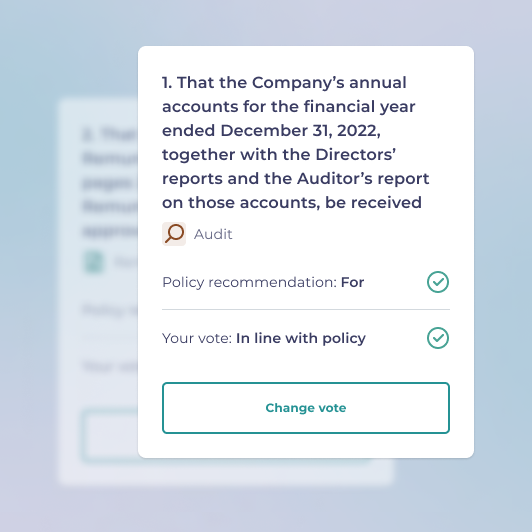
Investors can use a voting policy, or vote on individual proposals at companies to which they have greatest exposure, or on topics that align most closely with their strategy and values. Investors can even do a combination of both; overriding their policy on individual proposals if they wish.

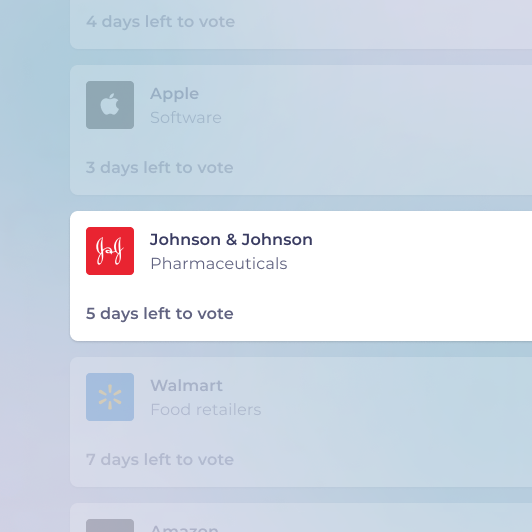
AGMs of companies Apple, Johnson & Johnson and Walmart are shown in a list. The Johnson & Johnson AGM being selected.
Tumelo's pass-through voting product is vote policy agnostic

Policy agnostic

Designed for versatility, investors can select a voting policy from leading proxy advisors and receive recommendations.

Institutional investors who already vote on segregated mandates can now apply their voting policy across their pooled funds as well.

ProxySphere can ingest voting recommendations from any provider, via any method (API, SFTP etc), ensuring investors have the best information to make informed decisions.

Read: Tumelo partners with leading proxy advisors

No vote goes unvoted

The ProxySphere system ensures that the fund manager always votes on 100% of their vote capital. It only splits the vote where underlying investors want to cast contrarian votes to the fund manager.

If an investor chooses not to vote, their vote capital is not lost; it remains with their fund manager, meaning no vote goes unvoted.

Voting flexibility – no vote goes unvoted with Tumelo's pass-through voting product
Retail and institutional pass-through voting with Tumelo's product

Retail and institutional

ProxySphere supports institutional, wholesale and retail investors by sourcing investor information from custodians, platforms and brokers. Its method avoids the need for fund managers to provide individual investor details.

This streamlined process not only ensures operational efficiency, but also aligns with 'Treating Clients Fairly' (TCF) regulations by maximising access for all investors.

Read: BetaNXT partnership — bringing pass-through voting to US retail investors

Modern intuitive interface

ProxySphere offers a simple, intuitive voting process on a user-friendly digital platform, bringing efficiency to the voting experience.

Via the platform, investors have access to all proposals as soon as they become available, and detailed reports on the votes placed and AGM results for any of their funds' portfolio companies.

The Tumelo pass-through voting retail and institutional platform has a modern and intuitive interface
on the Tumelo pass-through voting product users will receive personalised alerts on upcoming votes at companies AGMs

Personalised alerts

For Institutional investors that choose to vote manually or wish to be kept well informed, ProxySphere can provide personalised, timely alerts on pivotal voting matters, equipping you with the latest insights and data.

Contact us
Speak to one of our team

Bright smile, warm expression.

Aline de Visser

Head of ProxySphere Sales
LinkedIn 

Outdoor headshot of Edd Micklem smiling directly at the camera wearing a blue suit jacket and shirt with the cityscape in the background.

Edd Micklem

Head of Strategic Partnerships
LinkedIn 

Certification badge for ISO 27001 comprising of the British Assessment Bureau logo and UKAS Management System logo.

ISO 27001 Information Security Management Systems Accredited

Download our white paper or book a demo for more information on pass-through voting.

CTA to Download the Tumelo white paper on pass-through voting – February 2023, Titled: A deep dive into pass-through voting